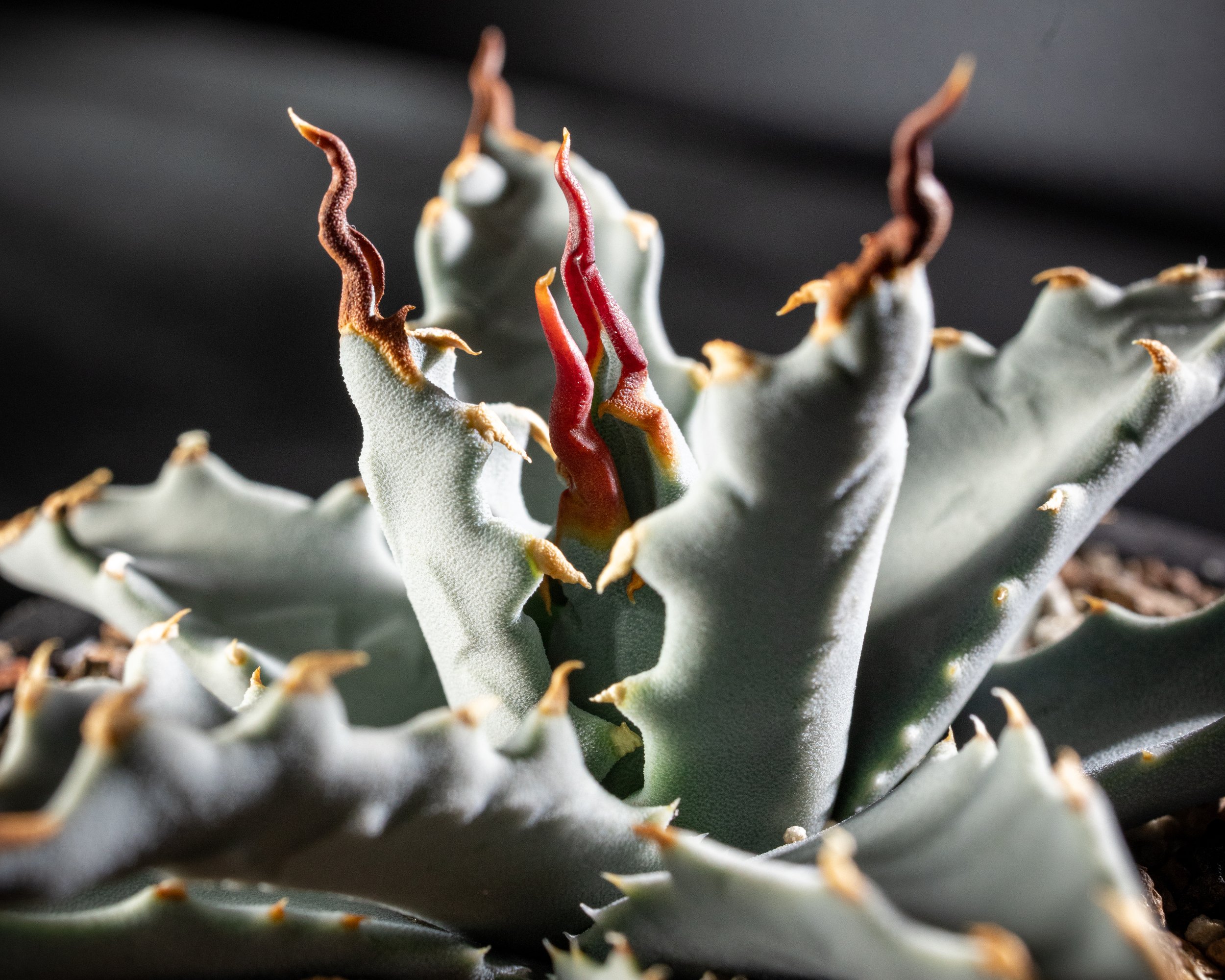
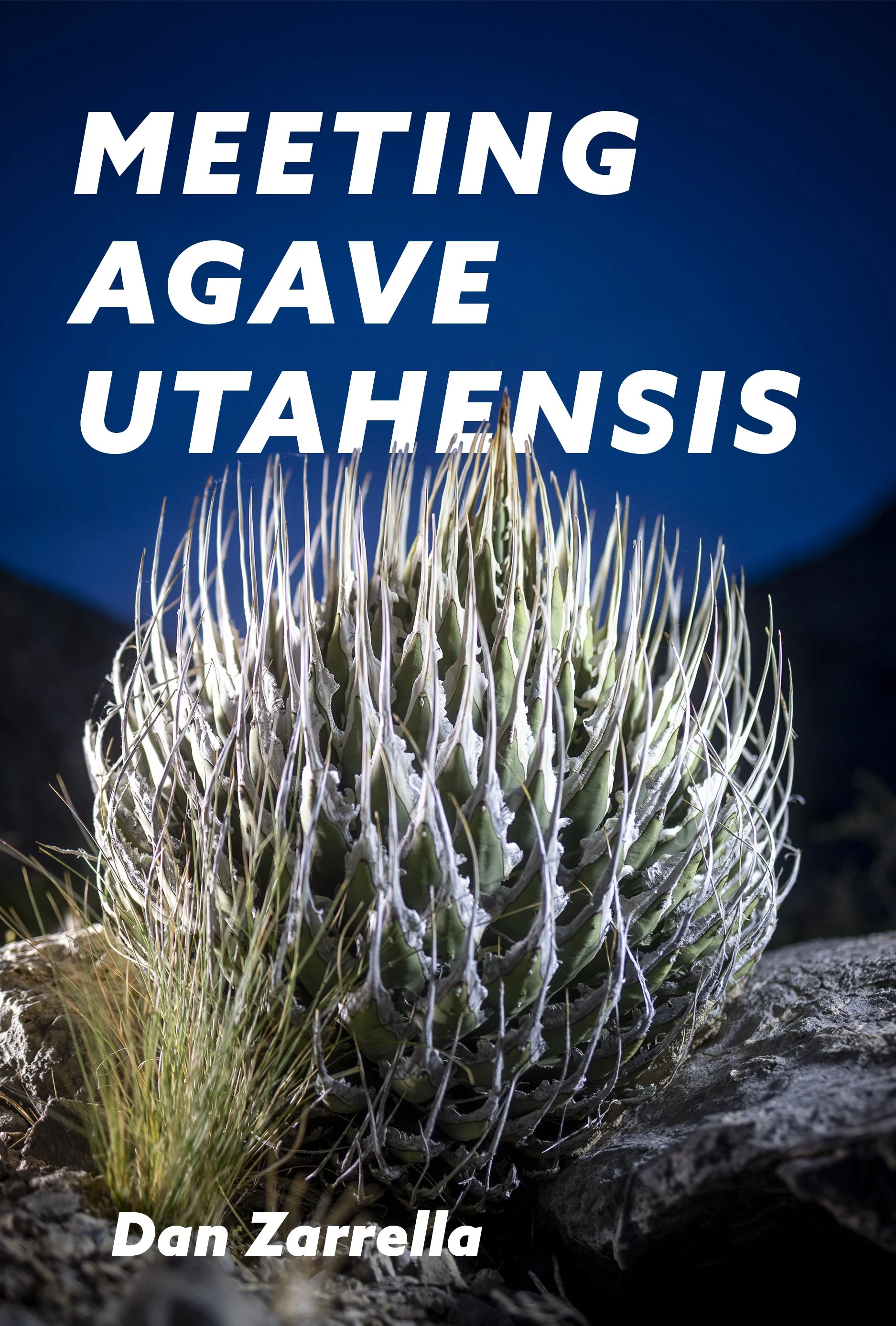
Meeting Agave utahensis.
The only monograph dedicated entirely to Agave utahensis.
Just launched: order here!
Meeting Agave Utahensis
An intimate, research-driven visual monograph dedicated to the Mojave's most coveted and iconic succulent. Tracing Agave utahensis across deep geological time, 3,000 years of Indigenous harvesting traditions, modern market poaching, and practical ethical cultivation.
Perfect-bound softcover
82 full color pages
30+ original full-color field and habitat photos

Read this before you buy an Agave Utahensis
Was that Agave utahensis you’re about to buy poached? Was it seed-grown? Is the seller lying to you about it being eborispina? Do you know how to properly care for it? Will it survive in your climate? There are some really important things you need to know before you purchase an Agave utahensis.
How to Care for Agave Utahensis
Agave utahensis evolved on limestone sky islands between 4,000 and 6,500 feet with cold winters months of drought. That isolation and pressure produced the wildly different subspecies utahensis, eborispina, nevadensis, and kaibabensis. Check out my Agave Utahensis care guide to learn about its soil, water, temperature, nutrient, and light requirements.
Why Agave Utahensis?
The relationship is 7,000 years old. Indigenous roasting pits still mark the ridgelines where they harvested it—stone rings built into limestone, burned clean by centuries of use. Agave uthanet survived ice ages and desertification and the arrival of Europeans. It adapted to pressure because pressure was the only constant: cold winters, alkaline soil, months without rain, wind that never stops. What grows on a sky island has no option to leave. It survives or it doesn't. I study what survives and why.
How Cold Hardy is Agave Utahensis?
Agave utahensis, commonly called Utah Agave, is the northern-most agave species and widely believed to be the most cold hardy, reportedly hardy down to 23c/-9f. In many of it’s habitats it spends months under a blanket of snow in sub-freezing temperatures. And it’s been successfully cultivated in places as cold as USDA hardiness zones 5 and 6. If you’re looking for a succulent to add to your garden, but you’re concerned about winters, check out how cold hardy agave utahensis is.

Habitat Photo Gallery
Agave utahensis grows in some of the most spectacular sand and limestone habitats here in the desert southwest. Found only in sky islands between 4,000 and 6,500 feet of elevation, just getting to a lot of plants is a challenge of it’s own. I spend a lot of time in that habitat—climbing limestone, documenting populations, recording what survives where and why. The plants that make it to the ridgelines have been selected by pressure for ten thousand years. I'm just paying attention.